Microbial Life IN The Oceans
UF Biology Semester of Immersion PCB4460
DETAILS FOR SPRING 2026 COMING SOON!
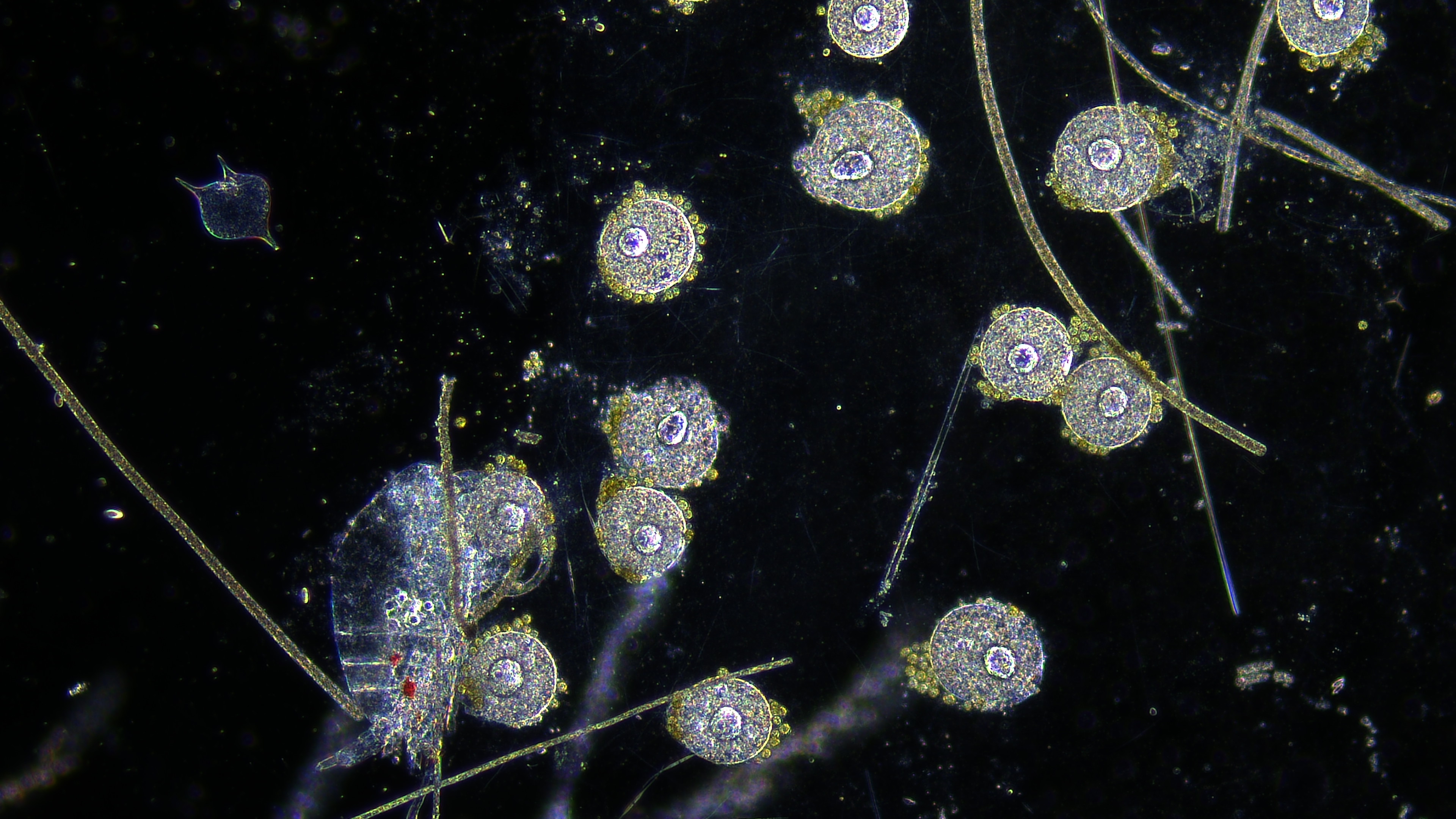
Participate in an authentic ocean research expedition! Learn how to collect and process samples and analyze data to study how microbial life impacts the health and function of our oceans.
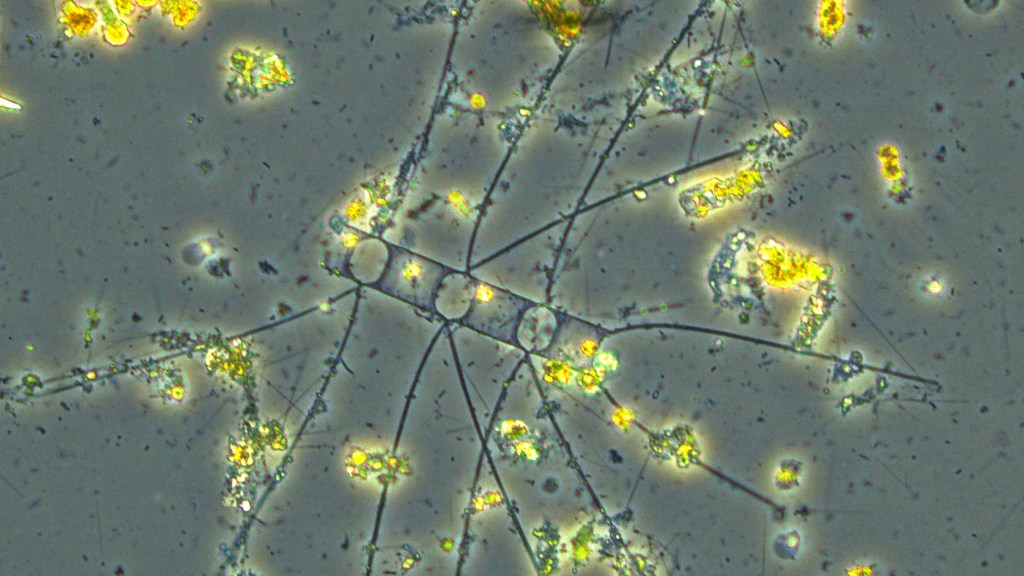
There are about 1 million microbial cells in every drop of seawater. These microbes form the base of the ocean food web and carry out vital ecosystem services. Our understanding of the marine microbial world has rapidly expanded with use of innovative molecular and chemical tools to uncover previously hidden taxonomic diversity, spatiotemporal distributions, and novel metabolic functions. In this course, students will gain exposure to these emerging research tools and investigate marine microbes from molecular to ecosystem scales, with a focus on diversity and dynamics of phytoplankton and bacterial metabolism in the surface ocean.
Our mission is centered on training undergraduate students in oceanography and environmental science and making field and laboratory science accessible.
We believe it is fundamental to incorporate hands-on, experiential learning in order to reach and retain students with diverse backgrounds, learning styles, and interests and broaden participation in science.
By participating you will:
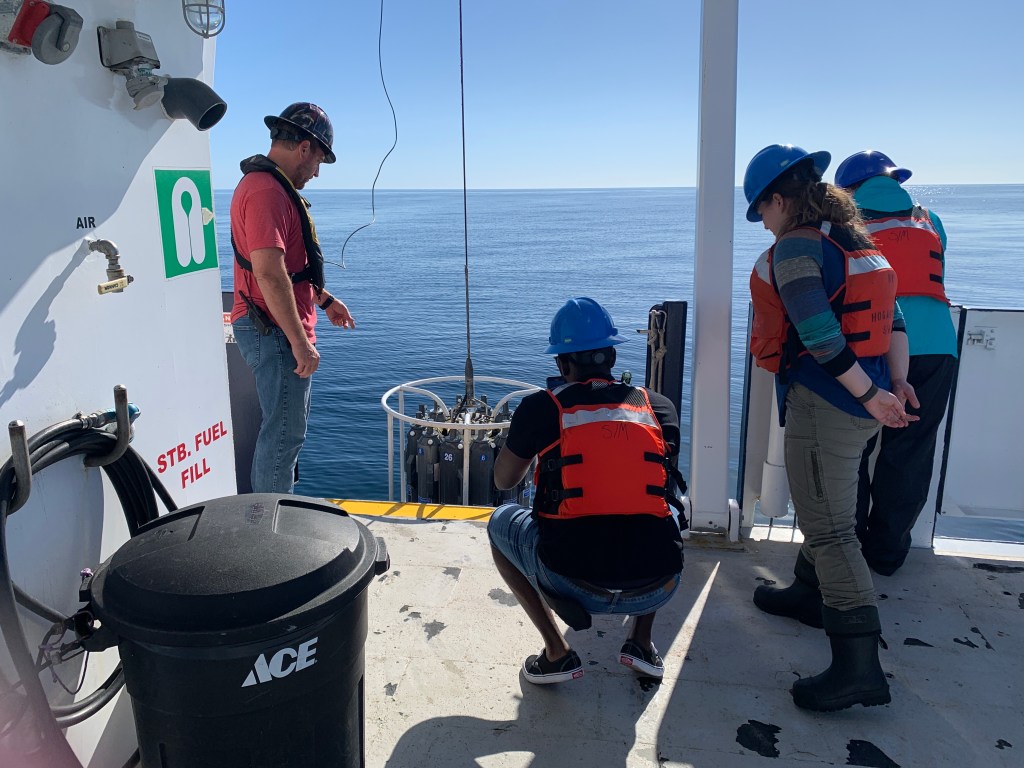
Collect.
You will actively participate in a sea-going research expedition and learn how to collect seawater samples and relevant environmental data.
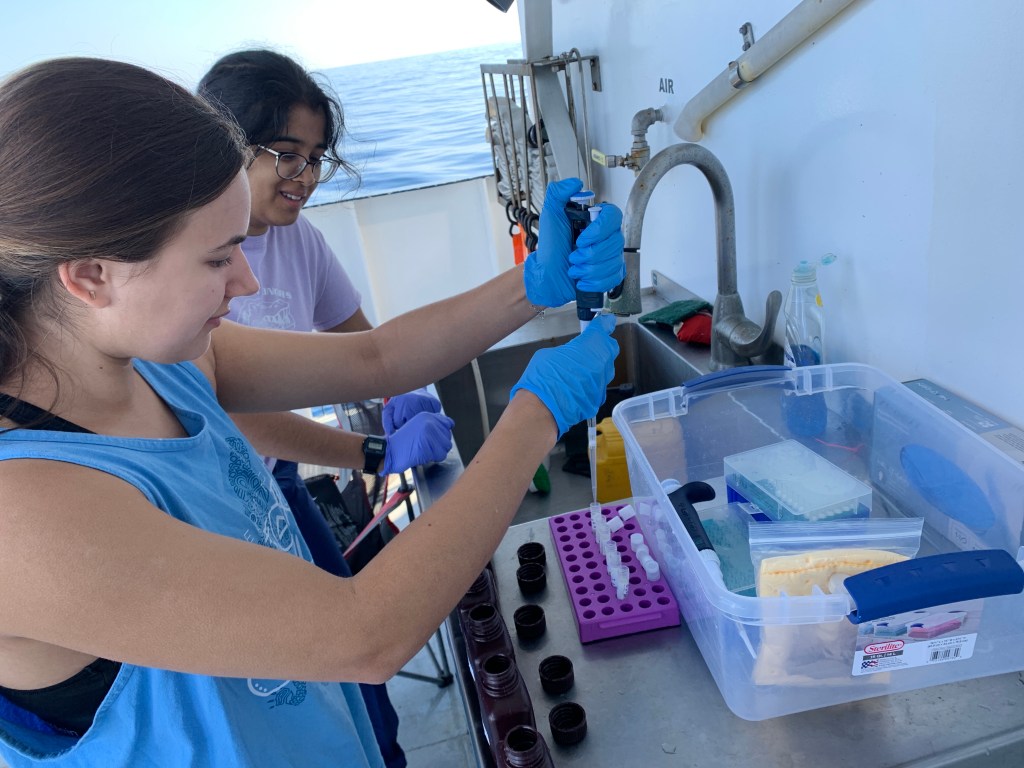
Process.
You will learn how to process environmental samples and prepare them for microbiological and chemical analyses.

Analyze.
You will use a combination of microbiology, molecular biology, chemistry, and downstream computational methods to analyze your data.
Technical Skills (some variation each year)
- Isolation and cultivation of microbes from environmental seawater samples
- Identification of microbes using DNA sequencing tools
- Characterization of marine metabolites using liquid chromatography and/or mass spectrometry data
- Operation of seaboard equipment and collection of routine oceanography measurements (e.g. temperature, salinity, pigments)
- Analysis and interpretation of marine molecular and chemical datatypes
Professional Development
- Contribute to authentic scientific research
- Gain intellectual responsibility through carrying out an independent project
- Engage in a supportive mentoring network with multiple instructors and a research diverse team
- Practice written and oral scientific communication skills
- Build teamwork skills by conducting field operations and coordinated research activities



 gomicrobes.org